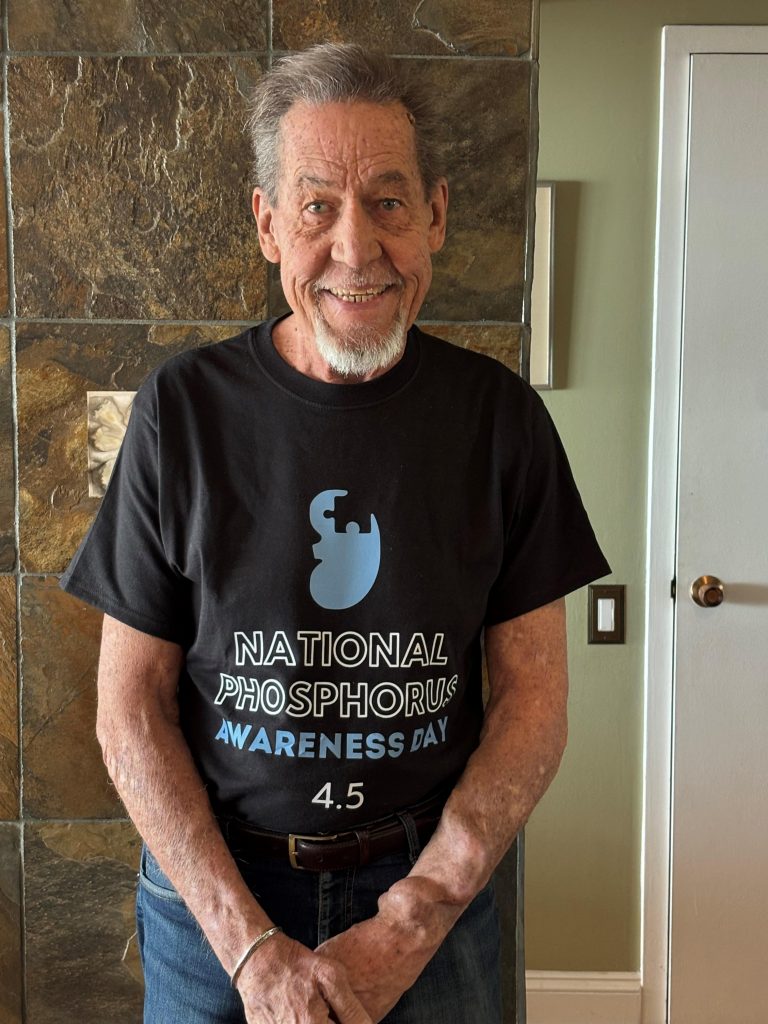
AAKP Ambassador and Dialysis Patient, Richard Stacewicz Shares His Kidney Story for National Phosphorus Awareness Day

Diana Clynes
In December of 1982, while on a three month long cross-country motorcycle trip with his young wife, Ann Goethals, Richard started having horrible headaches, nausea, and was throwing up. He had been feeling fine up to that point, but he suddenly got sick, and it was not going away.
Read More


NATIONAL KIDNEY MONTH “I Am More Than My Kidney Disease…” AAKP Ambassadors Respond

Diana Clynes
March is National Kidney Month. Help spread the word about kidney disease this month by sharing your personal story along with educational resources with your friends, family, and community. Kidney disease is a silent killer—let’s end the silence.In this article, AAKP Ambassadors share why they are more than their kidney disease.
Read More

AAKP Ambassador Brandi Nunez Shares Her Story for National Phosphorus Awareness Day

Deb Pelaez
“Food choice was the largest struggle for me when I was at the height of kidney disease. It seemed like no matter how many good food choices I made; nothing was good enough and my labs continued to trend out of range. Potassium, phosphorous, and iron were the hardest for me to calculate and manage.
Read More

AAKP Ambassador and Dialysis Patient Dawn Edwards Shares Why She Supports National Phosphorus Awareness Day

Diana Clynes
National Phosphorus Awareness Day – April 5Dawn shares this statement in support of National Phosphorus Awareness Day:“After navigating the challenges of kidney disease for 35 years, I only recently learned that elevated phosphorous not only causes brittle bones, which can lead to fractures, but also cardiac episodes.
Read More

Artificial Intelligence and Your Health: What Kidney Patients Need to Know

Diana Clynes
By Dr. Karen Flores, Dr. Massini Merzkani and Dr. Rohan PaulArtificial Intelligence, or AI, has become the new hot topic in the last several years and healthcare has undoubtedly been impacted. It is a powerful tool that can help improve patient care by mimicking some specific human abilities, such as learning from data and making decisions.
Read More