
Dale Rogers is a two-time kidney transplant recipient. Like many other kidney patients Dale has struggled with high potassium (also known as hyperkalemia).
Read More
Dale Rogers is a two-time kidney transplant recipient. Like many other kidney patients Dale has struggled with high potassium (also known as hyperkalemia). Dale shares that high potassium became a huge problem for him when he was fasting and dieting, while on dialysis, in order to get to a health weight for receiving a kidney transplant.
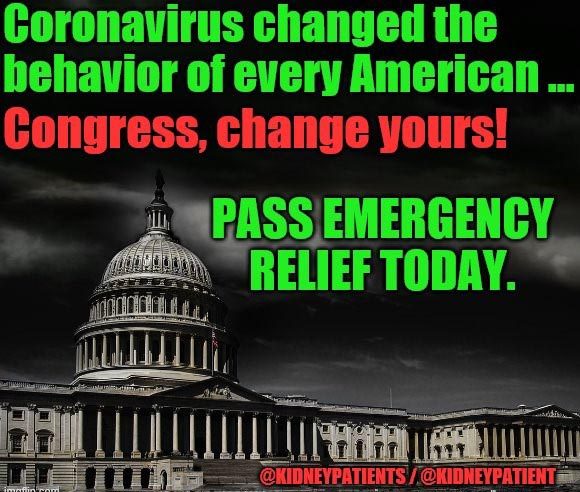
The American Association of Kidney Patients (AAKP) deployed a sophisticated, virtual campaign today aimed at pushing the U.S. Congress to act immediately on pending Coronavirus emergency response legislation to protect the health of all citizens; provide urgent assistance to workers and employers; and to inject a strategic stimulus into the national economy.
March is National Kidney Month. It is a time where we raise awareness across the country about kidney diseases and the importance of kidney health. This March is drastically different as we are not only raising awareness of kidneys, but across the globe, united we are working to manage the implications of the Coronavirus (COVID-19).

World Kidney Day is observed annually on the 2nd Thursday in March. At the start of this holiday, 66 countries observed this date in 2006. Within two years, this number rose to 88. WKD is a joint initiative of the International Society of Nephrology and the International Federation of Kidney Foundations (IFKF).
The American Association of Kidney Patients (AAKP), the nation’s largest fully independent kidney patient organization, today announced that given the serious threat posed by the Coronavirus to the kidney patient community, they are encouraging all patients and their families to avoid unnecessary travel, including all planned travel to Washington, D.C. during National Kidney Month in March and for the immediate future. Historically, hundreds of kidney patients and their families travel to the nation’s capital to discuss policies related to patient care choice and medical innovation with White House and Congressional officials.